Online therapy
What to expect from your first online therapy session
Feeling nervous before your first video session with a therapist is completely normal. Here is a calm, practical guide to what usually happens before, during and after that first appointment.
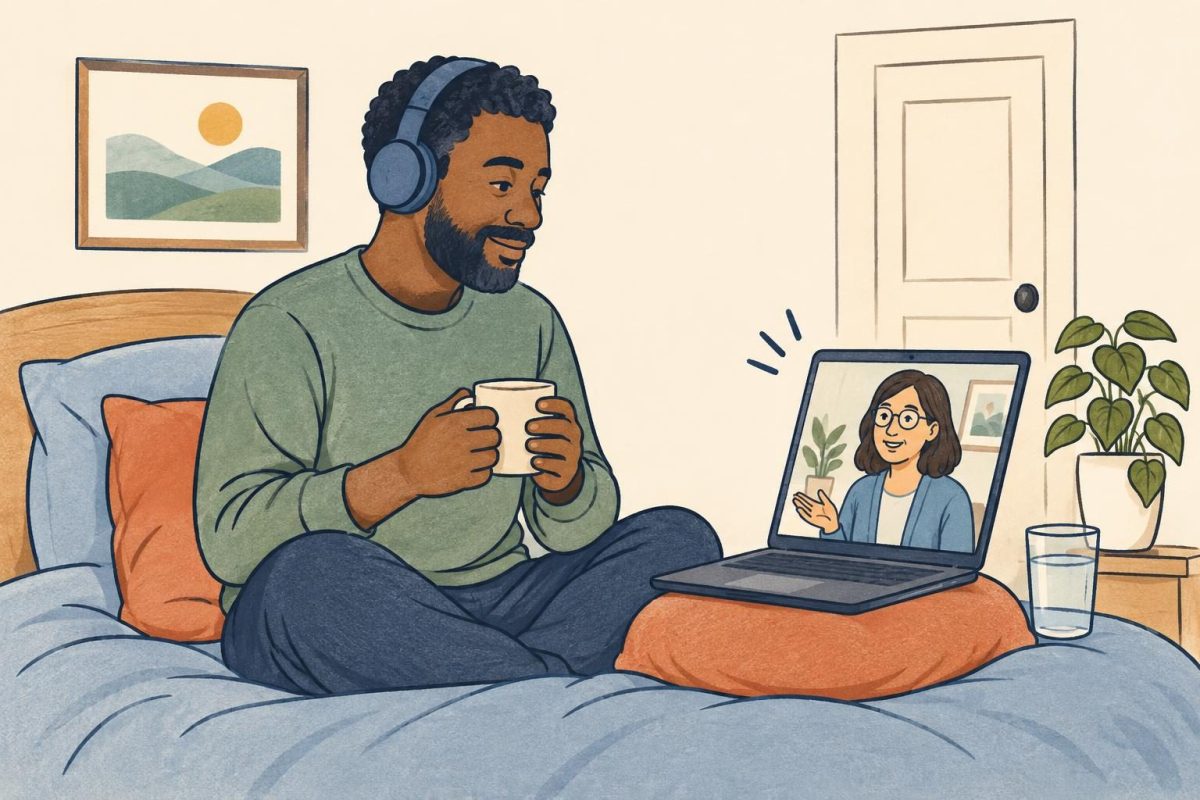
Booking your first therapy session can take a lot of courage. Once it is in the diary, it is natural to start wondering what will actually happen. Will you know what to say? What if you get upset? What if the video freezes halfway through a sentence?
These worries are very common, and they usually ease once you know what to expect. This guide walks you through a typical first online session, from getting ready beforehand to how you might feel when the call ends. Every therapist works a little differently, but the basics tend to be similar.
Before the session: getting ready
A little preparation can help you feel more settled when the session starts. You do not need special equipment. A phone, tablet or laptop with a camera, a microphone and a steady internet connection is usually enough.
Find a private space
Privacy matters a lot in therapy. You will be talking about personal things, so it helps to choose somewhere you will not be overheard or interrupted. Some ideas people find useful:
- A bedroom or spare room with the door closed
- Your car, parked somewhere quiet and safe
- A time when others in your home are out or busy
- Headphones, so your therapist's voice stays private
- A fan or radio playing outside the door to mask sound
If you cannot find a fully private space, that is worth mentioning to your therapist. They are used to helping people work around this.
Check your technology
About ten to fifteen minutes before your session, it can help to:
- Charge your device or plug it in
- Close other apps and tabs that might slow things down
- Test your camera and microphone
- Turn off notifications so messages do not pop up
- Prop your device up so you do not have to hold it
You might also want a glass of water and some tissues nearby. Not because you will definitely cry, but because it is nice to have them if you need them.
Think about what you want to say (if it helps)
Some people like to jot down a few notes before their first session: what has been going on, how long it has been happening, and what they hope might change. Others prefer to go in without a plan. Either is fine. You do not need to prepare a perfect summary of your life.
The first few minutes
When the session begins, your therapist will usually introduce themselves and check that you can see and hear each other clearly. The first few minutes often feel a bit awkward, and that is normal for both of you. Video calls can take a moment to get used to.
Your therapist may also talk through a few practical points. These are sometimes called the contract or agreement, which simply means the shared understanding of how you will work together. This might include:
- How long each session lasts and how often you will meet
- What happens if the connection drops, such as whether they will call you back or try to reconnect
- Their cancellation policy
- How to contact them between sessions, if at all
Confidentiality and its limits
Your therapist will explain that what you talk about is kept confidential. They will also explain the limits of this. In most cases, a therapist may need to share information if they believe you or someone else is at serious risk of harm, or if the law requires it. They will usually try to talk to you first if this ever comes up.
Therapists registered with professional bodies such as BACP, NCPS or UKCP follow ethical frameworks, and many also have regular supervision, where they discuss their work with an experienced colleague without sharing identifying details. If any of this is unclear, it is completely fine to ask.
What your therapist might ask
Much of the first session is about getting to know you and understanding what has brought you to therapy. Some therapists call this an assessment. It is not a test, and there are no right or wrong answers.
You might be asked things like:
- What made you decide to look for therapy now?
- How have you been feeling day to day?
- How are you sleeping, eating and managing work or daily life?
- Who do you have around you for support?
- Have you had therapy before, and what was it like?
- Are you taking any medication, or seeing your GP about how you feel?
- What would you like to be different?
Your therapist may also ask gently about your safety, including whether you have ever had thoughts of harming yourself. This is a routine question and does not mean they are worried about you in particular. It helps them understand how best to support you. You can answer honestly, and you can also say if a question feels too much right now.
You are always in charge of how much you share. If there is something you are not ready to talk about, you can simply say so. A good therapist will respect that and let trust build over time.
Questions you can ask
The first session is also a chance for you to find out whether this therapist feels right for you. You might want to ask:
- How do you usually work, and what kind of therapy do you offer?
- What might sessions look like over the next few weeks?
- How will we know if therapy is helping?
- Have you worked with people dealing with similar things?
- What should I do if I feel worse after a session?
Asking questions is not rude or demanding. Most therapists welcome them, because therapy tends to work best when you understand and feel comfortable with the approach.
Common worries about the first session
What if I do not know what to say?
Your therapist will guide the conversation, especially at first. Silence is allowed in therapy. Sometimes saying you do not know where to start is a perfectly good place to start.
What if I cry?
Crying in therapy is very common and nothing to apologise for. Therapists are used to strong feelings and will not judge you. Equally, it is fine if you do not feel emotional at all.
What if the video feels strange?
Many people feel a bit self-conscious on camera at first. You can ask to hide your own view of yourself on screen, which some people find helps them relax. Most people find it feels more natural after a session or two.
After the session
When the call ends, you might feel relieved, tired, lighter, unsettled or a mix of all of these. Talking about difficult things can stir up feelings, and it is normal to need a little time afterwards.
If you can, try to leave a gap after your session rather than going straight into a meeting or a busy task. A short walk, a cup of tea or a few quiet minutes can help you come back to your day.
It can also be useful to notice how you felt with your therapist. Did you feel listened to? Did you feel safe enough to be honest? It is normal for trust to take a few sessions to grow. But if something feels clearly wrong, you are allowed to try a different therapist. Finding the right fit is a normal part of the process, not a failure.
If you need help urgently
Online therapy is not an emergency service. If you ever feel unable to keep yourself safe, or you are worried about someone else, please get help straight away. In the UK you can call 999 in an emergency, call NHS 111 for urgent advice, or contact Samaritans free at any time on 116 123. Your GP can also talk with you about support that suits your situation.
Taking the first step
Your first online therapy session does not need to be perfect. It is simply a starting conversation: a chance to be heard, to ask questions and to see how it feels to work with someone. Many people find that the hardest part was deciding to book.
If you feel ready, you can find a therapist registered with BACP, NCPS or UKCP on WebcamTherapy and book a private video session that runs in your browser, with reminders sent by text and email so you do not have to keep track of the time yourself. Whenever you start, go at your own pace. You are allowed to take it one session at a time.
WebcamTherapy editorial team
Our articles are reviewed by registered therapists before publishing.
Related articles
Online therapy
Therapy when you live with a chronic illness or disability
Living with a long-term health condition or disability can affect your mood, relationships and sense of self. Here is how therapy can help, and how to make it work around your body and energy.
18 May 2024 · 7 min read
Online therapy
Online therapy when you live in a rural or remote area
Long drives, few local options and the feeling that everyone knows your business can make therapy hard to reach in the countryside. Here is how online sessions can help, and what to think about first.
16 Dec 2023 · 7 min read
Online therapy
Creating a private, comfortable space at home for video therapy
Where you sit for a video therapy session can shape how settled and open you feel. Here are practical ways to find privacy, reduce distractions and make an ordinary corner of your home feel safe enough to talk.
14 May 2023 · 7 min read