Online therapy
Therapy when you live with a chronic illness or disability
Living with a long-term health condition or disability can affect your mood, relationships and sense of self. Here is how therapy can help, and how to make it work around your body and energy.
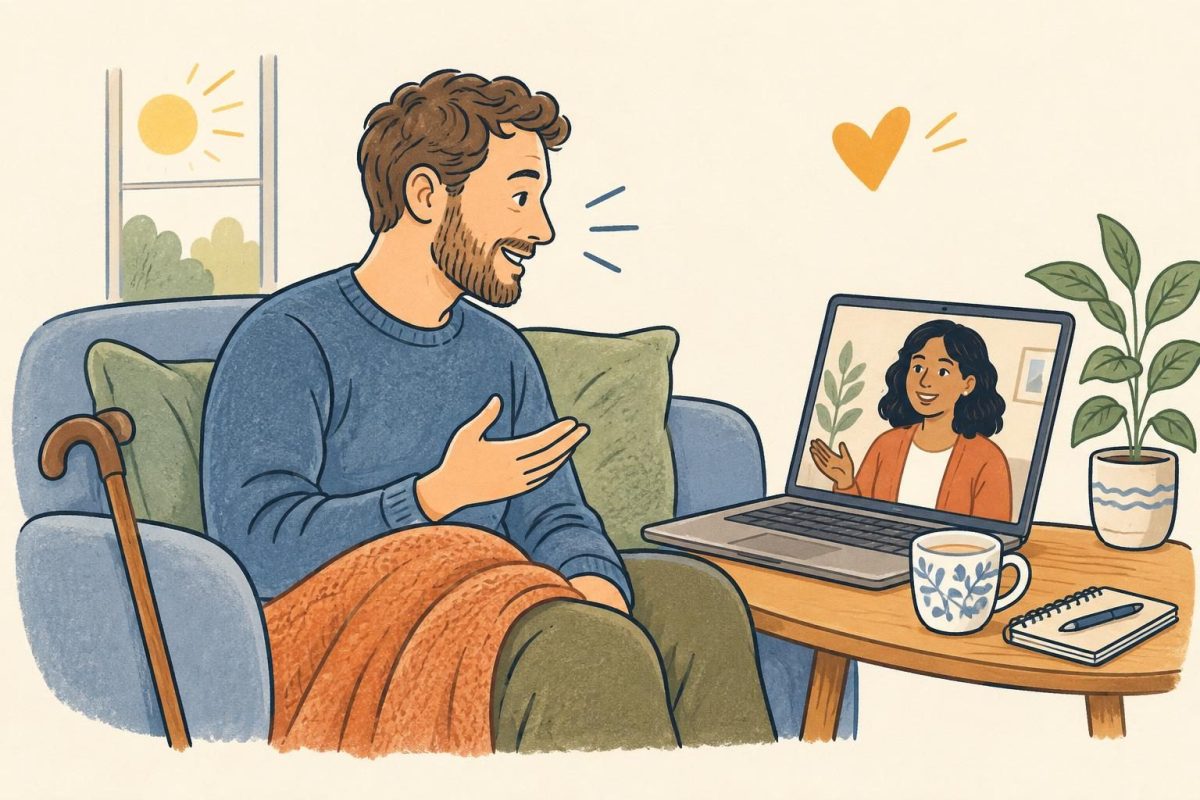
Living with a chronic illness or disability often means managing far more than symptoms. There are appointments, medication, forms, changing plans and the tiredness that comes with all of it. Alongside the practical side, there can be a quieter emotional load that other people do not always see.
Talking therapy will not change a diagnosis. What it can offer is a space to make sense of how your health affects your life, your feelings and your relationships, with someone who is there to listen and help you find ways forward. This article looks at what therapy can help with, what to look for in a therapist, and how online sessions can be shaped around your needs.
The emotional side of living with a long-term condition
People respond to long-term illness and disability in many different ways, and there is no right way to feel. Some common experiences include:
- Grief and loss. You might grieve the life you expected, a job you loved, or things you used to do easily. This kind of grief can come and go, often returning when something changes.
- Frustration and anger. It is natural to feel angry about pain, delays in getting help, or having to explain yourself again and again.
- Uncertainty. Many conditions fluctuate. Not knowing how you will feel tomorrow can make planning hard and keep you on edge.
- Isolation. Cancelled plans, reduced energy or inaccessible places can make it harder to stay connected with others.
- Changes to identity. You may wonder who you are now, especially if your role at work or at home has shifted.
- Feeling disbelieved. People with invisible or poorly understood conditions often describe feeling doubted, which can be deeply wearing.
It is also well recognised that people living with long-term physical health conditions are more likely to experience anxiety or depression. This is not a personal failing. It reflects how much pressure a chronic condition can put on a person. If you notice that low mood, worry or hopelessness are lasting for weeks, it is worth talking to your GP as well as considering therapy.
What therapy can and cannot do
It is important to be clear about this. Therapy is not a replacement for medical care, and a good therapist will never suggest that your physical symptoms are "all in your head". Your body and mind affect each other, but that does not mean your illness is imagined or caused by your thoughts.
What therapy can do is help with the parts of life that sit around your condition. For example, you might use sessions to:
- Talk openly about difficult feelings without worrying about upsetting family or friends
- Work through grief about changes in your health or abilities
- Find ways to cope with flare-ups, setbacks or uncertainty
- Notice and gently challenge harsh self-talk, such as feeling lazy or a burden
- Think about pacing, boundaries and how to say no without guilt
- Explore how your condition affects relationships, intimacy or family roles
- Prepare for difficult medical appointments or decisions
- Reconnect with what matters to you, even if the way you do it has changed
Therapy does not work in the same way for everyone, and progress is rarely a straight line. But many people find that having a steady, supportive space makes the overall weight a little easier to carry.
Approaches that are often used
Many types of therapy can be helpful when you live with a health condition. A therapist may draw on one approach or blend several. A few you might come across include:
Cognitive behavioural therapy (CBT)
CBT looks at the links between thoughts, feelings and behaviour. With a long-term condition, it is often used to help with anxiety, low mood, or patterns like pushing too hard on good days and crashing afterwards. Good CBT for health conditions respects your real limits rather than asking you to think your way out of symptoms.
Acceptance and commitment therapy (ACT)
ACT focuses on making room for difficult feelings and sensations, rather than fighting them, while moving towards things you value. Here, acceptance does not mean giving up or liking your situation. It means reducing the extra struggle that can build up around pain and distress.
Compassion-focused therapy
Many people with chronic illness are very hard on themselves. Compassion-focused work helps you develop a kinder, more understanding inner voice, which can ease shame and self-blame.
Person-centred and integrative counselling
Sometimes what you need most is to be heard without being fixed. Person-centred counselling offers warmth, acceptance and space to explore your experience at your own pace.
NICE has published guidance on depression in adults with a chronic physical health problem, which includes psychological therapies among the options. Your GP can talk you through what might suit your situation and what is available locally.
Finding a therapist who understands
You do not need a therapist who has the same condition as you, but it helps to find someone who is curious, respectful and willing to learn about your experience. When you first speak to a therapist, you might ask:
- Have you worked with people living with chronic illness, pain or disability?
- How do you approach the link between physical and emotional health?
- Are you comfortable adapting sessions if I am unwell or tired?
- How do you handle cancellations if my health changes at short notice?
It is reasonable to expect a therapist to take your access needs seriously. If you ever feel dismissed, that is useful information about fit, not a sign that therapy is not for you. Choosing a therapist registered with a professional body such as BACP, NCPS or UKCP also means they follow an ethical framework and agreed standards of practice.
Making online therapy work around your health
For many people with a chronic illness or disability, video therapy removes some real barriers. There is no travel, no waiting rooms, and no need to navigate buildings that may not be accessible. You can attend from a bed, a sofa or anywhere you feel comfortable and supported.
A few things can help sessions feel manageable:
- Tell your therapist about your needs early. This might include fatigue, pain, brain fog, hearing or sight differences, or needing to move or change position during a session. You do not have to explain everything at once.
- Agree a plan for difficult days. Talk about what happens if you need to stop early, take a short pause, or keep a session lighter when you are struggling.
- Choose a time that suits your energy. Some people feel clearer in the morning, others later in the day. It is worth asking whether your therapist can offer a time that fits.
- Keep things nearby. A drink, medication, a blanket, a cushion or a notebook can make it easier to stay settled.
- Use notes if memory is affected. Jotting down a few points before or after a session can help you keep track of what you want to talk about.
You are allowed to set the pace. Therapy should fit around your life, not add to the pressure.
If things feel very hard
Living with ongoing illness or pain can sometimes lead to feelings of hopelessness, or thoughts that life is not worth living. If this happens, please know you are not alone and support is available. Online therapy is not an emergency service. If you are in immediate danger, call 999. You can call NHS 111 for urgent advice, or contact Samaritans free on 116 123 at any time, day or night.
It can also help to let your GP or care team know how you are feeling emotionally, as well as physically. Your mental health is part of your overall health.
Taking a first step
Reaching out for support when you already have a lot to manage can feel like one more task. It might help to start small, perhaps by reading a few therapist profiles or noting down what you would most like help with. You do not need to have the right words or a clear goal before you begin.
If you would like to try therapy from home, you can book a private video session with a registered therapist through WebcamTherapy, at a time that suits you. Whatever you decide, your feelings about living with illness or disability matter, and you deserve support that takes the whole of you into account.
WebcamTherapy editorial team
Our articles are reviewed by registered therapists before publishing.
Related articles
Online therapy
What to expect from your first online therapy session
Feeling nervous before your first video session with a therapist is completely normal. Here is a calm, practical guide to what usually happens before, during and after that first appointment.
10 Nov 2026 · 7 min read
Online therapy
Is online therapy as effective as face-to-face therapy?
Many people wonder whether talking to a therapist through a screen can really help as much as sitting in the same room. Here is what the evidence generally suggests, and how to decide what suits you.
27 Mar 2025 · 7 min read
Online therapy
Online therapy when you live in a rural or remote area
Long drives, few local options and the feeling that everyone knows your business can make therapy hard to reach in the countryside. Here is how online sessions can help, and what to think about first.
16 Dec 2023 · 7 min read