Online therapy
Creating a private, comfortable space at home for video therapy
Where you sit for a video therapy session can shape how settled and open you feel. Here are practical ways to find privacy, reduce distractions and make an ordinary corner of your home feel safe enough to talk.
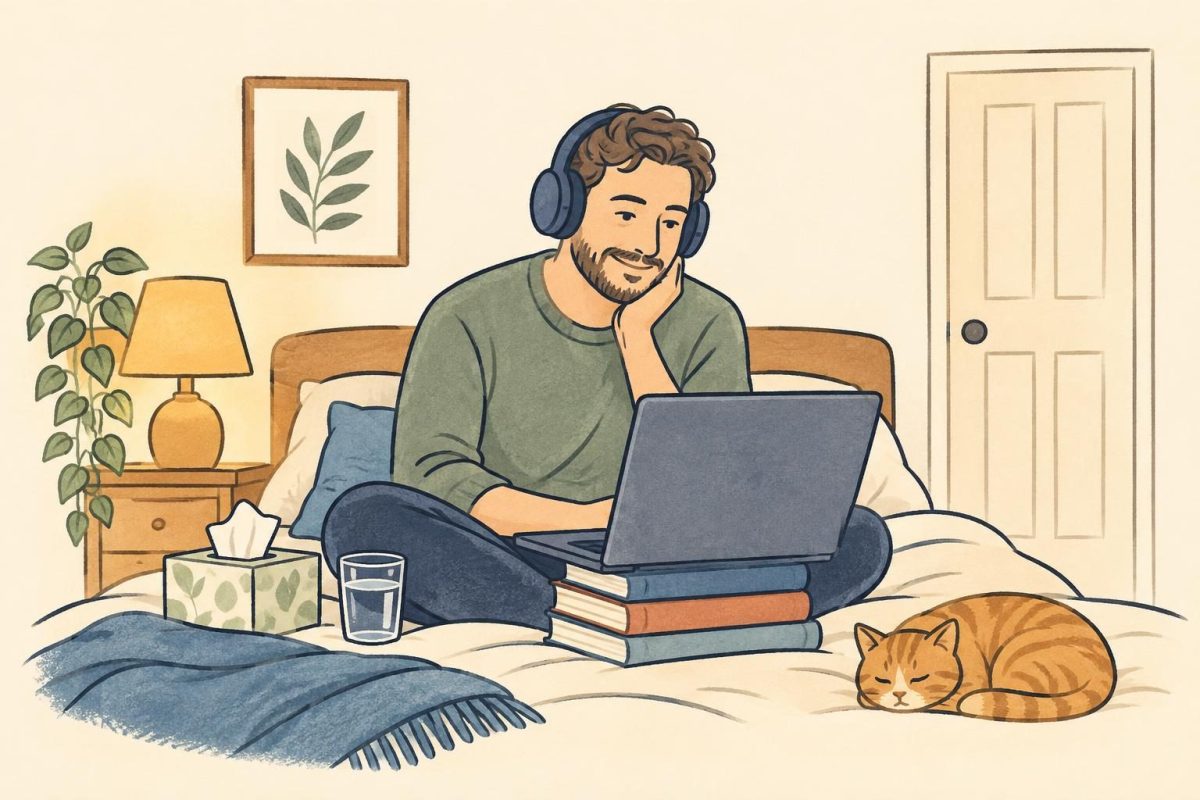
One of the things people like about online therapy is that you can talk to a therapist without leaving home. No travel, no waiting room, no rushing back to work afterwards. But home is also where everyday life happens. There are housemates, children, pets, deliveries and the washing machine finishing its spin cycle at just the wrong moment.
You do not need a perfect room to have a good session. A little planning can make the space you use feel more private and more comfortable, so you can focus on what you want to talk about. This article looks at practical ways to do that, whatever your living situation.
Why your space matters
Therapy often involves talking about things you might not say anywhere else. If part of your mind is listening for footsteps on the stairs or wondering whether someone can hear through the wall, it can be harder to open up. You might hold back, speak more quietly than you would like, or find yourself watching the door.
A space that feels private and settled helps your attention stay with the conversation. It does not have to be special or beautifully arranged. What matters most is that you feel reasonably sure you will not be overheard or interrupted, and that you are physically comfortable enough to sit for the length of the session.
Finding somewhere private, even in a busy home
Not everyone has a spare room. Many people share a flat, live with family or have small children around. Here are some options people often find useful:
- A bedroom with the door closed. This is the most common choice. Sitting on the bed or a chair facing away from the door can help you feel more tucked away.
- A quieter time of day. If your home is busy in the evenings, you might book a session when others are at work, at school or asleep.
- A parked car. Some people use their car, parked somewhere quiet and safe, with the engine off. Never take part in a session while driving.
- A friend or relative's home. If home is rarely private, someone you trust may be happy to lend you a room for an hour.
It can help to let the people you live with know you need some uninterrupted time. You do not have to explain why. Saying you have an important call and need the room for an hour is enough. Some people put a simple sign on the door or agree a signal with their household.
If privacy at home does not feel safe
For some people, the difficulty is not noise but the person they live with. If you are worried that someone at home might listen in, check your device or react badly to you having therapy, it is worth telling your therapist early on. They can talk with you about ways to keep sessions safer, such as agreeing what to do if someone walks in, or using a quiet word that means you need to stop.
Online therapy is not an emergency service. If you are ever in immediate danger, call 999. You can call NHS 111 for urgent advice, or contact Samaritans free on 116 123 at any time, day or night.
Sound: hearing and being heard
Sound is often the biggest worry. A few small changes can make a real difference:
- Use headphones. Wearing headphones means only you can hear your therapist. Many people find this makes them feel much more private, even if they are still talking out loud.
- Add some background noise outside the room. A fan, radio or white noise playing just outside your door can make it harder for others to make out what you are saying.
- Soften the room. Rooms with hard floors and bare walls can echo. Curtains, cushions, a rug or a duvet nearby can make your voice sound clearer and less likely to carry.
- Silence notifications. Turn off alerts on your phone, tablet and computer so pings and buzzes do not pull you away mid-thought.
Making the space comfortable
Sessions usually last around 50 minutes to an hour, so being comfortable matters. Think about what helps you feel settled.
- Seating. Choose somewhere you can sit for a while without aching. A chair with good back support, or a bed with pillows behind you, both work.
- Temperature. Feeling too cold or too warm is distracting. Have a jumper or blanket within reach.
- Lighting. Try to have light in front of you rather than behind. A bright window behind you can turn your face into a silhouette, making it harder for your therapist to see your expressions. A lamp to one side or in front often helps.
- A few small things nearby. A glass of water, tissues and perhaps a notebook and pen. Some people like to have something comforting to hold, such as a soft cushion or a smooth stone.
Pets can be lovely company, but they can also wander across the keyboard or bark at the postman. You know your animals best. Some people find a calm pet on their lap helps them feel grounded, while others prefer to keep them out of the room.
Getting the technology out of the way
You do not need expensive equipment. Most laptops, tablets and smartphones work well for video sessions. The aim is for the technology to fade into the background so you can concentrate on talking.
- Charge your device or keep it plugged in, so the battery does not run low halfway through.
- Put it on a steady surface. Holding a phone for an hour is tiring. A stack of books or a simple stand keeps the camera still and roughly at eye level.
- Check your connection. If your Wi-Fi is patchy, sitting closer to the router can help. Asking others in the house not to stream films during your session can also free up the connection.
- Close other apps and tabs. This reduces distractions and can help the video run more smoothly.
- Test things beforehand. Check that your camera, microphone and headphones work a little while before your first session.
It is also worth agreeing with your therapist what will happen if the connection drops. Knowing in advance, for example whether they will try to reconnect or contact you another way, can take away some of the worry if it does happen.
Small rituals before and after
When you see a therapist in person, the journey there and back gives you time to prepare and to process. At home, you might go from washing up to talking about something painful in a matter of seconds. Building in a little space either side can help.
Before your session, you might:
- Get set up five or ten minutes early so you are not rushing.
- Take a few slow breaths, or simply sit quietly and notice how you are feeling.
- Jot down anything you would like to bring up.
Afterwards, try not to jump straight back into emails or chores if you can avoid it. Some people make a cup of tea, step outside for a short walk, or write a few notes about what came up. Others like to change something in the room, such as opening a window or moving the chair, as a way of marking that the session has ended and the space is ordinary again.
When things do not go to plan
Even with good preparation, life sometimes gets in the way. A child might knock on the door, a parcel might arrive or the internet might stutter. This is normal, and therapists who work online are used to it. It is fine to say you need a moment, or to mention if you are feeling less able to talk freely because someone is nearby.
Your therapist can also help you work out what suits you. If you keep finding it hard to relax in a particular spot, it may be worth trying a different room, time or setup. It can take a few sessions to find what feels right, and that is part of the process rather than a sign that something is wrong.
If you are thinking about starting therapy from home, WebcamTherapy lets you book a private video session with a therapist registered with BACP, NCPS or UKCP, straight from your browser. Wherever you choose to sit, the most important thing is that it feels like a place where you can be yourself for an hour.
WebcamTherapy editorial team
Our articles are reviewed by registered therapists before publishing.
Related articles
Online therapy
What to expect from your first online therapy session
Feeling nervous before your first video session with a therapist is completely normal. Here is a calm, practical guide to what usually happens before, during and after that first appointment.
10 Nov 2026 · 7 min read
Online therapy
Therapy when you live with a chronic illness or disability
Living with a long-term health condition or disability can affect your mood, relationships and sense of self. Here is how therapy can help, and how to make it work around your body and energy.
18 May 2024 · 7 min read
Online therapy
Online therapy when you live in a rural or remote area
Long drives, few local options and the feeling that everyone knows your business can make therapy hard to reach in the countryside. Here is how online sessions can help, and what to think about first.
16 Dec 2023 · 7 min read