Anxiety
Understanding generalised anxiety disorder and how talking therapy helps
When worry spreads across almost every part of life and is hard to switch off, it may be generalised anxiety disorder. Here is what GAD is, why worry keeps itself going, and how talking therapy can help you relate to it differently.
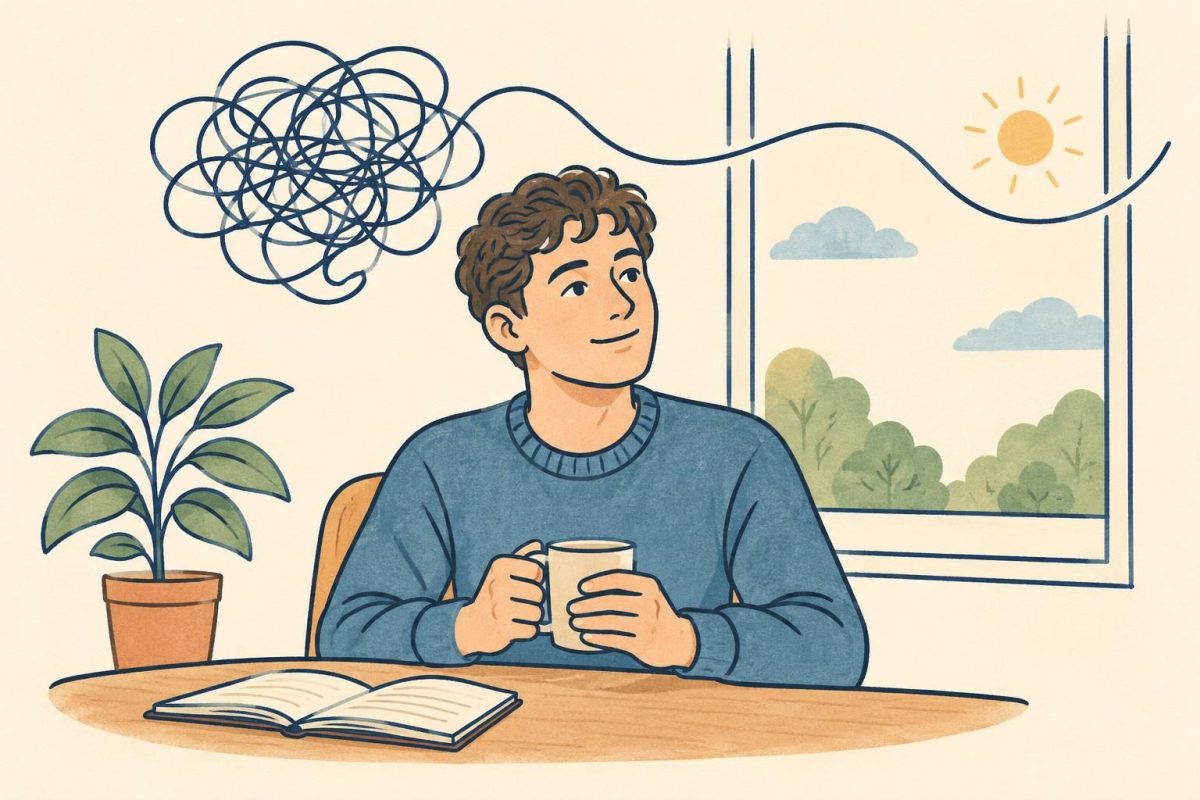
Most of us worry from time to time. A big bill, a health appointment or a difficult conversation can keep anyone awake. For some people, though, worry does not settle once the problem passes. It moves on to the next thing, and the next, until it feels like a constant background hum. If that sounds familiar, you may have heard the term generalised anxiety disorder, often shortened to GAD.
This article explains what GAD is, why worry can become so hard to put down, and how talking therapy can help. It is general information rather than a diagnosis, so if you recognise yourself here, it is worth talking to your GP or a registered professional about your own situation.
What generalised anxiety disorder is
Generalised anxiety disorder is a long-term condition where a person feels anxious about a wide range of everyday things, rather than one specific fear. The word generalised is the key. Someone with a phobia of spiders feels fear around spiders. Someone with GAD might worry about work, money, their family's safety, their health, being late, saying the wrong thing and whether they locked the door, often all in the same day.
The worry tends to feel out of proportion to the situation, hard to control and present most days over a long period, usually several months or more. People with GAD often know their worries are bigger than they need to be, but knowing this does not make them stop.
GAD is common, and it is a recognised health condition, not a weakness or a personality flaw. It can affect anyone, and it often sits alongside other difficulties such as low mood, panic or poor sleep.
Common signs to look out for
GAD shows up in the mind and the body. Everyone is different, but common experiences include:
- Worrying a lot of the time, about many different things
- Finding it very hard to stop or distract yourself from worry
- Feeling restless, on edge or unable to relax
- Getting tired easily, even without much physical effort
- Trouble concentrating, or your mind going blank
- Feeling irritable or short-tempered
- Tense muscles, headaches or an aching jaw
- Difficulty falling asleep or staying asleep
- Physical sensations such as a racing heart, an unsettled stomach or feeling sick
Many people also notice changes in what they do. You might check things repeatedly, seek reassurance from others, over-prepare, avoid situations that feel uncertain, or put off decisions because none of the options feels safe enough. Some of these physical symptoms can also have other causes, which is another good reason to speak to your GP.
Why worry keeps itself going
One of the most helpful things to understand about GAD is that worry often feels useful, even when it is exhausting. Many people with GAD hold beliefs such as worrying helps me prepare, or if I stop worrying, something bad will happen. When the feared event does not happen, it can feel as though the worry protected you, which quietly strengthens the habit.
At the same time, people often develop worries about the worry itself. You might fear that all this worrying will make you ill, or that you are losing control of your mind. This second layer of worry adds more anxiety on top of the first.
Difficulty with uncertainty
Researchers and therapists often describe GAD as closely linked to finding uncertainty very hard to tolerate. Life is full of things we cannot know for sure. If not knowing feels unbearable, the mind tries to solve it by running through every possible outcome. Worry becomes a way of trying to feel certain, but because certainty is rarely possible, the worry never quite finishes its job.
Avoidance and reassurance
Avoiding uncertain situations or asking others for reassurance can bring quick relief. The trouble is that the relief does not last, and it can stop you discovering that you are able to cope with not knowing. Over time, the space you feel safe in can become smaller.
How talking therapy helps with GAD
The good news is that GAD can be treated, and talking therapy is one of the main approaches. In England, NICE guidance recommends psychological treatments for GAD, usually starting with self-help or guided self-help, and, where more support is needed, individual cognitive behavioural therapy (CBT) or applied relaxation. Medication can also be an option, and that is a conversation to have with your GP.
Therapy does not aim to remove worry completely, because some worry is a normal part of being human. Instead, it aims to help you worry less often, feel less caught up when you do, and get back to the things that matter to you.
CBT focused on worry
CBT for GAD is tailored to how worry works. Rather than trying to answer every worry, you and your therapist look at the patterns underneath. Depending on your needs, this might involve:
- Noticing the difference between practical worries you can act on and hypothetical what if worries you cannot
- Using problem-solving steps for the practical worries, so they feel more manageable
- Gently questioning beliefs about worry, such as the idea that worrying keeps you safe
- Practising living with small amounts of uncertainty, step by step, so it feels less threatening
- Reducing checking, over-preparing and reassurance-seeking at a pace that feels manageable
- Trying worry time, where you set aside a short period each day for worries and postpone them outside that time
Applied relaxation
Applied relaxation is a structured approach that teaches you to recognise the early signs of tension in your body and to relax quickly in everyday situations. It is practised over a number of sessions, starting in calm moments and gradually using the skill when you feel anxious. It is quite different from simply being told to relax, which rarely helps anyone.
Other talking therapies
Some people find other approaches helpful too, such as counselling or therapies that explore the roots of anxious patterns. Having a steady, non-judgemental relationship with a therapist can be valuable in itself, especially if you have spent years managing worry alone. A good therapist will talk with you about what the evidence suggests and what feels right for you.
What therapy for GAD can feel like
Early sessions usually involve your therapist getting to know you: what you worry about, how long it has been going on, how it affects your sleep, work and relationships, and what you would like to be different. You might be asked to keep a simple record of when worries come up and what you do in response. This is not a test. It simply helps you both see the patterns more clearly.
Progress is often gradual. You might first notice that worries pass a little faster, or that you can leave a decision unmade for an hour without feeling dreadful. Some weeks will feel harder than others, and that is normal. Practising between sessions tends to make a real difference, so a therapist may suggest small tasks to try in daily life.
Small things you can try now
While therapy is the main focus here, a few gentle habits can support you:
- Name it. Saying to yourself, this is a worry, not a fact, can create a little distance.
- Sort the worry. Ask whether it is something you can act on today. If so, choose one small step. If not, try noting it down for later.
- Look after the basics. Regular sleep, movement and meals will not cure GAD, but they can make worry easier to manage.
- Notice reassurance-seeking. You do not have to stop all at once, but noticing it is a useful start.
Getting support
If worry has been taking up much of your life for some time, you deserve support. Your GP is a good first step, and in many areas you can also refer yourself to NHS talking therapy services. Some people prefer to see a private therapist. If that suits you, you can book a therapist registered with BACP, NCPS or UKCP through WebcamTherapy for a private video session from home.
Online therapy is not an emergency service. If you ever feel unsafe or have thoughts of harming yourself, call 999 in an emergency, call NHS 111, or contact Samaritans free on 116 123 at any time, day or night.
Living with GAD can be tiring, but many people find that, with the right support, worry loosens its hold and life starts to feel roomier again.
WebcamTherapy editorial team
Our articles are reviewed by registered therapists before publishing.
Related articles

Anxiety
Social anxiety: small steps that make a real difference
Social anxiety can make everyday moments feel like a test you might fail. Here is why it tends to keep itself going, and some small, manageable steps that can gradually loosen its hold.
17 Feb 2024 · 7 min read
Anxiety
Panic attacks: what happens in your body and how therapy can help
A panic attack can feel frightening and out of the blue. Understanding what your body is doing, and why, is often the first step towards feeling less afraid of the next one.
17 Sep 2023 · 7 min read
Therapy explained
How CBT works: the links between thoughts, feelings and behaviour
Cognitive behavioural therapy is built on a simple idea: what we think, how we feel and what we do all affect each other. Here is how that cycle works, and how CBT helps you change it.
10 Nov 2026 · 7 min read