Therapy explained
How CBT works: the links between thoughts, feelings and behaviour
Cognitive behavioural therapy is built on a simple idea: what we think, how we feel and what we do all affect each other. Here is how that cycle works, and how CBT helps you change it.
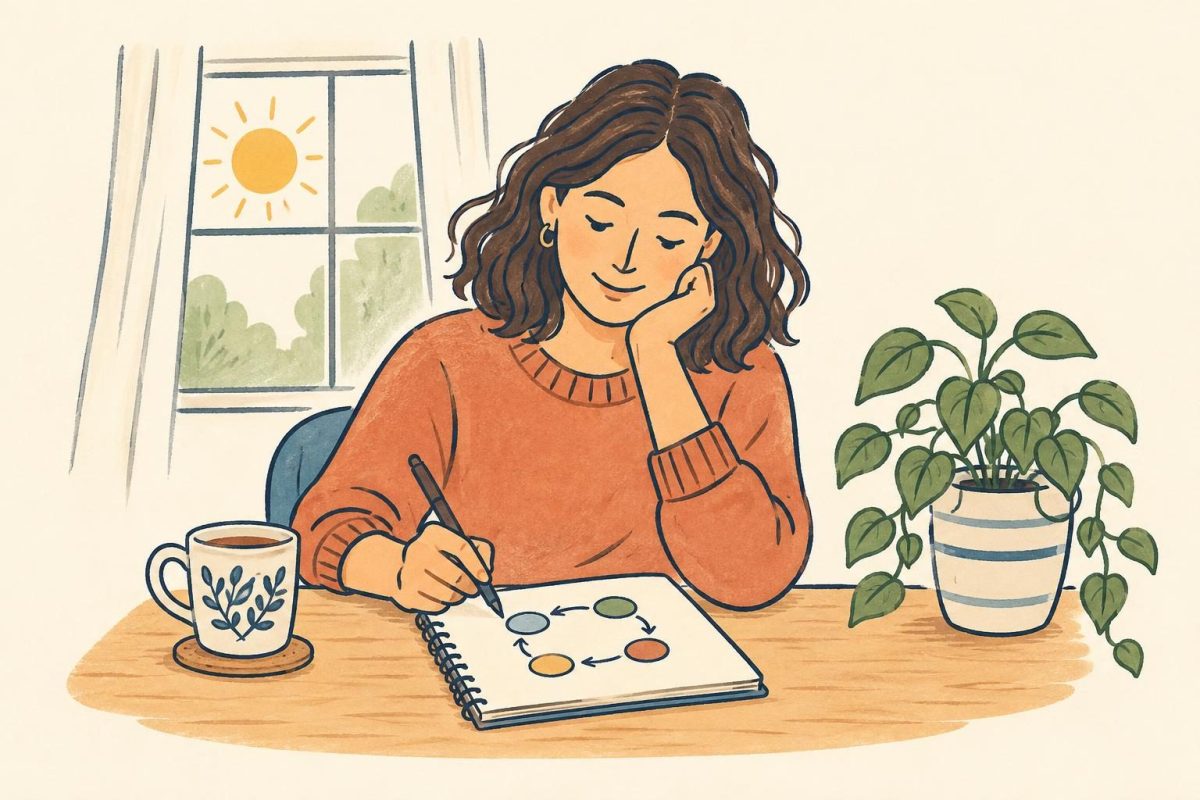
Cognitive behavioural therapy, usually called CBT, is one of the best-known talking therapies in the UK. You may have been offered it by your GP, seen it mentioned online, or heard a friend describe the ‘homework’ they were given. But what is actually going on in CBT, and why does it focus so much on thoughts and actions?
This guide explains the core idea behind CBT in plain language, with everyday examples, so you can decide whether it might suit you.
What CBT is, in a nutshell
CBT is a practical, structured form of therapy. ‘Cognitive’ refers to your thoughts, beliefs and the way you interpret things. ‘Behavioural’ refers to what you do, including what you avoid doing.
The central idea is that your thoughts, feelings, body sensations and behaviour are all connected. A change in one tends to affect the others. When we are struggling, these parts can get stuck in a loop that keeps us feeling bad. CBT helps you notice that loop and gently break it.
CBT tends to focus on what is happening now and what keeps a problem going, rather than spending most of the time exploring the past. Your history still matters, and a CBT therapist will want to understand it, but the main work is about the here and now.
In the UK, NICE (the body that advises the NHS on treatments) recommends CBT as one option for depression and for several anxiety problems, such as generalised anxiety, panic and social anxiety. That does not mean it works for everyone, but it does mean there is a solid body of research behind it.
The cycle: how thoughts, feelings and behaviour connect
CBT therapists often draw a simple diagram with four parts linked by arrows:
- Thoughts – what goes through your mind, including quick, automatic thoughts you barely notice.
- Feelings – emotions such as worry, sadness, shame or anger.
- Physical sensations – a racing heart, tight chest, tiredness or a churning stomach.
- Behaviour – what you do, or stop doing, in response.
Each part feeds into the others. Here is an everyday example.
An example: the unanswered message
Imagine you send a friend a message and they do not reply all day. One person might think, ‘They’re probably busy.’ They feel fine and get on with their evening.
Another person might think, ‘They’re annoyed with me. I must have said something wrong.’ That thought brings a feeling of worry and perhaps a sinking feeling in the stomach. They might check their phone again and again, reread old messages looking for mistakes, or decide not to contact the friend again in case they are a nuisance.
The situation is exactly the same. What differs is the interpretation, and that interpretation shapes the feelings, the body’s reaction and the behaviour. The behaviour then feeds back into the thoughts. Avoiding the friend means you never find out they were simply busy, so the worried belief stays in place.
CBT does not suggest your feelings are wrong or that you are to blame for them. It simply looks at how the parts of the cycle are keeping each other going, and where a small change might help.
Thinking traps: common patterns CBT looks at
When we are anxious, low or stressed, our minds tend to fall into certain patterns. CBT sometimes calls these ‘unhelpful thinking styles’ or ‘thinking traps’. Everyone has them from time to time. They become a problem when they are frequent and strongly believed.
- Catastrophising – jumping to the worst possible outcome, such as assuming a headache means something serious.
- Mind reading – feeling sure you know what others think of you, usually something negative.
- All-or-nothing thinking – seeing things as total success or total failure, with nothing in between.
- Overgeneralising – taking one bad experience as proof that things will always go wrong.
- ‘Should’ statements – holding yourself to rigid rules, such as ‘I should always cope on my own.’
- Discounting the positive – brushing off good things as luck or as not counting.
In CBT, you learn to spot these patterns and then look at the thought more closely. What is the evidence for it? What is the evidence against it? What would you say to a friend who thought the same thing? The aim is not to force yourself to think positively, but to find a view that is more balanced and realistic.
Why behaviour matters so much
The ‘behavioural’ part of CBT is just as important as the thinking part. Often, the things we do to feel better in the short term keep a problem going in the long term.
Avoidance
If you feel anxious about social events, staying at home brings instant relief. But over time, the world can start to feel smaller and the fear can grow, because you never get the chance to learn that you can cope. CBT may help you approach feared situations gradually, at a pace you agree with your therapist.
Safety behaviours
These are small things people do to get through a situation, like rehearsing every sentence before speaking or always sitting near the door. They can feel protective, but they may stop you discovering that the feared outcome would not have happened anyway.
Withdrawing when feeling low
When mood is low, it is natural to stop doing things you used to enjoy. Unfortunately, doing less often leads to feeling worse, which leads to doing even less. A part of CBT called behavioural activation involves slowly building back meaningful or enjoyable activities, even small ones like a short walk or a phone call, to help lift mood over time.
What actually happens in CBT sessions
CBT is usually more structured than some other therapies. While every therapist works a little differently, you can generally expect:
- An assessment – talking about what brings you to therapy and what you would like to change.
- Shared goals – agreeing clear, realistic aims together.
- Mapping your cycle – drawing out how your own thoughts, feelings, sensations and behaviours connect.
- Learning and trying techniques – such as keeping a thought record, testing out a belief with a ‘behavioural experiment’, or planning activities.
- Practice between sessions – often called homework, though it is collaborative rather than marked.
- Reviewing progress – checking what is helping and adjusting the plan.
CBT is often shorter than some other types of therapy, frequently running for a set number of weekly sessions agreed at the start. The exact length depends on you, the difficulty you are working on and your therapist’s approach.
A big part of CBT is learning skills you can keep using once therapy ends. Many people find it helpful that they come away with tools they understand and can return to.
What CBT is not
There are a few common misunderstandings worth clearing up:
- It is not just ‘think positive’. CBT is about balanced, realistic thinking, not pretending everything is fine.
- It does not ignore your feelings or your past. A good CBT therapist will listen carefully and take your experiences seriously.
- It is not a quick fix. It takes effort and practice, and progress can be uneven.
- It is not right for everyone. Some people find a different approach, such as person-centred counselling or psychodynamic therapy, suits them better. That is completely valid.
CBT can also be delivered well over video. Because it involves a lot of conversation, shared diagrams and worksheets, many people find it works comfortably from home.
Is CBT right for you?
CBT may appeal to you if you like a practical, goal-focused approach and are willing to try things out between sessions. It can help to ask a therapist how they work, what a typical session looks like and how long they expect therapy to last. If you have questions about your own health, including how therapy might fit alongside any medication, your GP is a good place to start.
If you would like to explore CBT, you can book a private video session with a BACP, NCPS or UKCP registered therapist through WebcamTherapy, and ask about their approach before you begin.
Please remember that online therapy is not an emergency service. If you ever feel unsafe or are thinking about harming yourself, call 999 in an emergency, call NHS 111, or contact Samaritans free on 116 123 at any time, day or night.
WebcamTherapy editorial team
Our articles are reviewed by registered therapists before publishing.
Related articles
Therapy explained
How to tell if a therapist is the right fit for you
The relationship you have with your therapist matters. Here is how to notice whether it is working, how to tell normal discomfort from a poor match, and what to do if you want to change.
22 Jul 2024 · 7 min read
Therapy explained
Person-centred therapy explained: being heard on your own terms
Person-centred therapy trusts that you are the expert on your own life. Here is what it involves, what sessions are like, and who it may suit.
20 Apr 2024 · 7 min read

Therapy explained
How to check a therapist is registered with BACP, NCPS or UKCP
Counselling and psychotherapy are not protected titles in the UK, so it helps to know how to check a therapist's registration yourself. Here is a simple, step-by-step guide.
15 Aug 2023 · 6 min read