Therapy explained
How many therapy sessions will I need? What shapes the length of therapy
There is no single right number of therapy sessions. This guide explains what affects how long therapy lasts, typical patterns for different approaches, and how you and your therapist can review progress together.
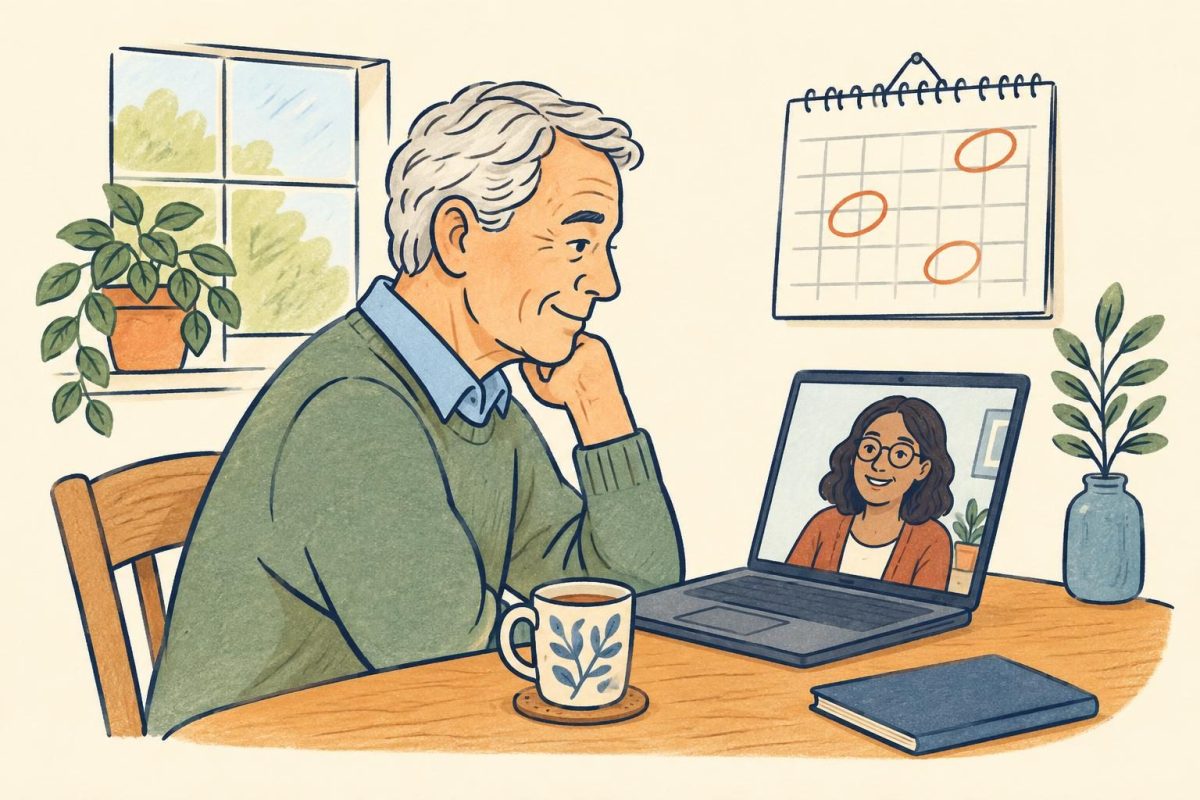
One of the most common questions people ask before starting therapy is simple: how many sessions will I need? It is a sensible thing to wonder. You may be thinking about cost, time off work, or just how long it will be before you start to feel different.
The honest answer is that it varies from person to person. Some people find a handful of sessions is enough to get them through a difficult patch. Others choose to work with a therapist for many months, or longer. Neither is better or worse. This article explains what tends to shape the length of therapy, so you can go into it with realistic expectations and feel able to talk about it openly with your therapist.
Why there is no single answer
Therapy is not like a course of medicine with a fixed number of doses. It is a working relationship between you and a trained professional, and it adapts to what you bring.
Two people might both describe themselves as anxious, yet need quite different things. One might want practical tools to manage worry before a job interview. Another might be making sense of anxiety that has been with them since childhood. The first may find a short, focused piece of work helpful. The second may benefit from more time.
Because of this, most therapists will not promise a set number of sessions at the start. Instead, they will usually suggest an approximate plan and agree to review it with you as you go.
The things that affect how long therapy lasts
Several factors can make therapy shorter or longer. None of them are things to feel bad about. They are simply part of the picture.
What you want to work on
A clear, specific goal, such as coping better with a particular situation, can often be worked on in a shorter time. Broader goals, such as understanding repeating patterns in relationships or rebuilding a sense of self, usually take longer.
How long the difficulty has been around
Something that started recently, after a single event or change, may respond more quickly than something that has built up over many years. Long-standing patterns often have deep roots, and it takes time to understand them gently.
The type of therapy
Some approaches are designed to be brief and structured. Others are open-ended by nature. There is more on this below.
What else is going on in your life
Stressful circumstances, such as money worries, caring responsibilities, health problems or a big life change, can affect how much space you have for therapy. Sometimes part of therapy is simply about getting through a hard time, and that is valuable in itself.
The relationship with your therapist
Feeling safe and understood makes a real difference. It can take a few sessions to settle in, and that early time is not wasted. It is part of the foundation the rest of the work is built on.
Typical patterns for different approaches
The figures below are general guides, not rules. Your own therapist will be able to tell you how they usually work.
- Brief or short-term counselling: sometimes offered as a set number of sessions, often around six, to focus on a particular concern. Many workplace and student services work this way.
- Cognitive behavioural therapy (CBT): usually structured and time-limited. For many common difficulties, a course often falls somewhere between about six and twenty sessions, depending on the problem and how things progress.
- EMDR: for a single distressing event, the processing work can sometimes be relatively brief once the preparation stage is in place. For more complex or repeated trauma, it usually takes longer, because careful preparation and pacing matter.
- Person-centred counselling: often open-ended, led by what you want to explore. It can be short or long.
- Psychodynamic and other in-depth therapies: can be short-term, but are often longer, sometimes lasting many months or more, as they explore how past experiences shape the present.
If you are seeing a therapist through the NHS, a charity or an employer scheme, there may be a set limit on sessions. In private therapy, you and your therapist usually have more flexibility to decide together.
How often sessions happen
Most therapy happens weekly, with sessions usually lasting around 50 minutes to an hour. Weekly sessions help keep momentum and give you time between sessions to reflect or try things out.
Some people meet every two weeks, especially later on, or when cost or time is a factor. Towards the end of therapy, sessions are sometimes spaced out further to help you adjust to managing on your own. It is worth asking your therapist what they recommend and why.
Reviewing progress along the way
A good therapist will check in with you regularly about how things are going. This is sometimes called a review. It might happen after a set number of sessions, or whenever either of you feels it would help.
A review is a chance to think about questions like these:
- What has changed since you started, even in small ways?
- Are your original goals still the right ones, or have new things come up?
- Does the pace feel right, or would you like to slow down or focus more?
- Roughly how much longer feels useful?
You do not have to wait for your therapist to raise this. You are always welcome to ask, "How do you think we are getting on?" or "How many more sessions do you think might help?" Asking is not rude or ungrateful. It is part of being an active partner in your own therapy.
When progress feels slow
Change in therapy is rarely a straight line. It is common to have weeks where you feel you have moved forward, and others where things seem stuck or even harder. Talking about painful things can sometimes bring up difficult feelings before it brings relief.
If you feel nothing is shifting after a while, it is worth saying so. Your therapist might suggest a different focus, a different way of working, or, in some cases, a referral to someone with more specific experience. Sometimes the fit between you and a therapist is not quite right, and changing is a reasonable choice.
If your mood gets much worse, or you start to have thoughts of harming yourself, please tell your therapist and speak to your GP. Online therapy is not an emergency service. In the UK you can call 999 in an emergency, call NHS 111, or contact Samaritans free on 116 123 at any time, day or night.
Knowing when it might be time to finish
There is no exam to pass before therapy ends. Often people notice signs such as:
- feeling more able to cope with things that used to overwhelm you
- using what you have learned without needing to talk it through first
- having less to bring to sessions
- feeling ready, even if a little nervous, to try things on your own
Ideally, ending is planned together rather than happening suddenly. A few sessions to look back on what has changed and think about the future can help you leave feeling steady. Many therapists are also happy for clients to return later if they need a top-up.
Planning around cost and time
If cost is a concern, it is fine to say so at the start. Some people book a set block of sessions and review at the end. Others agree on a focused goal to make the most of a limited number of sessions. Being open about what is realistic for you helps your therapist plan the work in a way that suits your life.
If you are thinking about starting, WebcamTherapy lets you book a therapist registered with BACP, NCPS or UKCP for private video sessions from home, and you can talk about the likely length of therapy with them early on. Whatever route you choose, remember that the right number of sessions is the number that genuinely helps you, and it is something you get to shape together.
WebcamTherapy editorial team
Our articles are reviewed by registered therapists before publishing.
Related articles
Therapy explained
How CBT works: the links between thoughts, feelings and behaviour
Cognitive behavioural therapy is built on a simple idea: what we think, how we feel and what we do all affect each other. Here is how that cycle works, and how CBT helps you change it.
10 Nov 2026 · 7 min read
Therapy explained
What happens after therapy ends: keeping your progress going
Finishing therapy can bring relief, pride and a little uncertainty. Here is how endings usually work, what you might feel afterwards, and practical ways to hold on to what you have learned.
3 Oct 2026 · 6 min read
Therapy explained
Dialectical behaviour therapy skills for intense emotions
Dialectical behaviour therapy (DBT) teaches practical skills for moments when feelings become overwhelming. Here is a calm guide to what DBT is, the four main skill areas, and a few techniques people often find useful.
31 Mar 2026 · 7 min read