Therapy explained
Dialectical behaviour therapy skills for intense emotions
Dialectical behaviour therapy (DBT) teaches practical skills for moments when feelings become overwhelming. Here is a calm guide to what DBT is, the four main skill areas, and a few techniques people often find useful.

Some people feel emotions quickly, strongly and for a long time. A small comment can lead to a wave of hurt or anger that feels impossible to ride out. Afterwards, you might regret something you said or did in the heat of the moment, or feel exhausted by how much it took out of you.
If that sounds familiar, you are not weak or broken. Many people experience emotions this intensely, often for understandable reasons. Dialectical behaviour therapy, usually called DBT, was designed with this in mind. It focuses on learning practical skills so that strong feelings become a little easier to manage.
This article explains what DBT is, what the main skill areas are, and some techniques you might come across. It is general information, not a substitute for advice about your own situation.
What dialectical behaviour therapy is
DBT is a type of talking therapy that grew out of cognitive behavioural therapy (CBT). It was originally developed in the United States to help people who experience very intense emotions, including people who self-harm or have frequent thoughts of suicide. Over time, its skills have been adapted for a wider range of difficulties where emotions feel hard to control.
The word dialectical sounds technical, but the idea is simple. It means holding two things that seem opposite at the same time. In DBT, the central pair is acceptance and change:
- Accepting yourself and your feelings as they are right now, without harsh judgement.
- At the same time, working towards changing the patterns that are causing you pain.
Many people find this balance a relief. Instead of being told to simply "calm down" or "think differently", you are recognised as doing your best, while also being helped to build new ways of coping.
A full DBT programme is quite structured. It often includes individual therapy sessions, a weekly skills group, support between sessions, and a team of therapists who support each other. Many therapists also offer what is called DBT-informed therapy, where they draw on DBT skills within one-to-one sessions rather than running the full programme. Both can be helpful, and it is fine to ask a therapist which they offer.
In the UK, NICE guidance mentions DBT as an option for some people with a diagnosis of borderline personality disorder, particularly where reducing self-harm is a priority. DBT is not right for everyone, and no therapy works for every person, but research suggests its skills can help many people feel more in control of their emotions.
The four main skill areas
DBT skills are usually taught in four groups, sometimes called modules. Each one targets a different part of the experience of intense emotion.
1. Mindfulness
Mindfulness sits at the heart of DBT. It means paying attention to the present moment, on purpose, without judging what you notice. In DBT, mindfulness helps you notice an emotion building before it takes over.
One well-known idea is wise mind. DBT describes an "emotion mind", driven by feelings, and a "reasonable mind", driven by logic and facts. Wise mind is where the two overlap: you can feel your emotions and still make a thoughtful choice.
2. Distress tolerance
These are skills for getting through a crisis moment without making things worse. They are not about fixing the problem straight away. They are about surviving the peak of the feeling safely, so you can deal with the situation later from a calmer place.
3. Emotion regulation
These skills help you understand your emotions, reduce how vulnerable you are to them, and change emotions that are not helping you. Over time, the aim is for strong feelings to arise a little less often and pass a little more quickly.
4. Interpersonal effectiveness
Intense emotions often show up in relationships. These skills help you ask for what you need, say no, and handle conflict while keeping your self-respect and, where possible, the relationship.
Skills for the hardest moments
When an emotion is at its peak, thinking clearly can feel almost impossible. DBT offers some simple, body-based skills for these times. Here are a few commonly taught examples.
STOP
A short sequence to create a pause before acting on impulse:
- Stop. Freeze for a moment. Do not react yet.
- Take a step back. Physically or mentally move away from the situation. Take a breath.
- Observe. Notice what is happening inside you and around you.
- Proceed mindfully. Ask yourself what would help, and act with that in mind.
Changing your body chemistry
DBT teaches that very strong emotions are partly physical, so changing what your body is doing can bring the intensity down. Techniques include:
- Cool temperature. Splashing cold water on your face or holding something cool can help slow the body down. If you have a heart condition or other health concern, check with your GP before using cold water this way.
- Brief, vigorous movement. A short burst of activity, such as a brisk walk or climbing stairs, can use up some of the energy that comes with strong emotion.
- Paced breathing. Breathing out more slowly than you breathe in, for example in for a count of four and out for six, can help the body settle.
- Muscle relaxation. Tensing a muscle group gently, then letting it go as you breathe out.
Radical acceptance
Sometimes a situation is painful and cannot be changed right now. Radical acceptance means fully acknowledging reality as it is, rather than fighting against it. It does not mean you approve of what happened. It means you stop adding extra suffering by repeatedly telling yourself it should not be this way.
Skills for everyday emotional balance
Not all DBT skills are for crisis moments. Some are about building steadiness over time.
- Naming emotions. Putting an accurate word to a feeling, such as disappointed, ashamed or lonely rather than just "bad", can make it feel more manageable.
- Checking the facts. Asking whether your emotion and its strength fit the actual situation. Sometimes it does, and that is useful to know. Sometimes an old worry or assumption has added to it.
- Opposite action. When an emotion pushes you towards something unhelpful, gently doing the opposite. For example, if low mood tells you to stay in bed all day, getting up and going outside for ten minutes.
- Looking after your body. DBT recognises that poor sleep, skipped meals, illness and alcohol or drugs can make emotions harder to handle. Caring for these basics lowers your vulnerability.
- Building positive experiences. Planning small, pleasant things into each week, and working towards goals that matter to you.
Asking for what you need
Interpersonal effectiveness skills can be especially helpful if conversations tend to escalate or you find it hard to speak up. One commonly taught structure for asking for something is:
- Describe the situation using facts.
- Express how you feel about it, using "I" statements.
- Assert what you would like, clearly and simply.
- Reinforce by explaining how it would help, or what is in it for the other person.
For example: "We agreed to split the chores, but I have done the washing-up every night this week. I feel tired and a bit taken for granted. Could we take turns from tomorrow? I think we would both feel less tense."
The approach also encourages you to stay focused, appear confident even if you do not feel it, and be willing to negotiate.
Why practice matters, and how therapy helps
DBT skills can look simple on paper, but using them when you are flooded with emotion is hard. That is normal. Like learning any new skill, they work best when practised regularly during calmer times, so they are easier to reach for when you need them.
A therapist can help you choose skills that fit your life, practise them together, and look at what got in the way when a skill did not work. They can also help you understand the patterns behind your emotions, at a pace that feels manageable. Many people find it helpful to keep a simple record of situations, feelings and the skills they tried, to discuss in sessions.
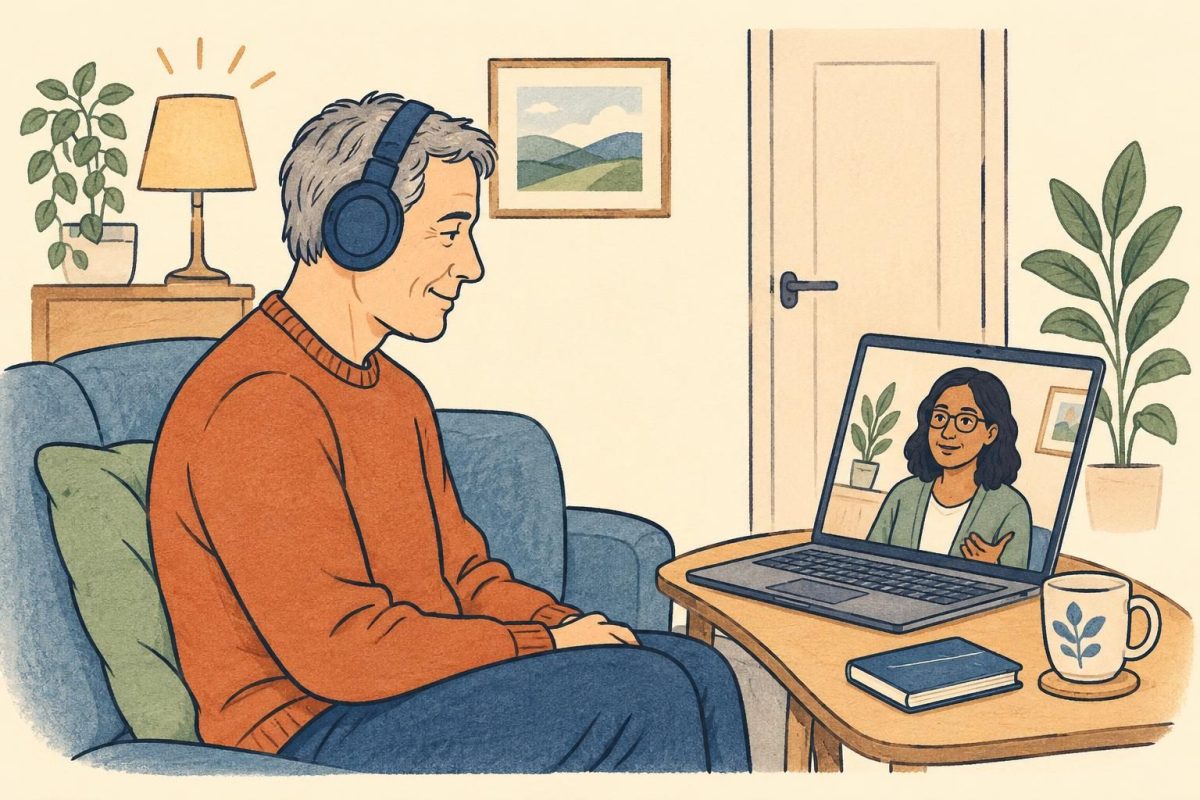
If you are curious about DBT, your GP is a good starting point to talk through your options, including what may be available locally. You can also book a private video session with a registered therapist through WebcamTherapy and ask whether they use DBT or DBT-informed approaches.
If things feel unsafe
Intense emotions can sometimes lead to thoughts of self-harm or suicide. If that is happening for you, please reach out for support. Online therapy is not an emergency service. In the UK, call 999 if you are in immediate danger, call NHS 111 for urgent advice, or contact Samaritans free on 116 123 at any time, day or night. You do not have to manage these feelings alone.
WebcamTherapy editorial team
Our articles are reviewed by registered therapists before publishing.
Related articles

Therapy explained
How CBT works: the links between thoughts, feelings and behaviour
Cognitive behavioural therapy is built on a simple idea: what we think, how we feel and what we do all affect each other. Here is how that cycle works, and how CBT helps you change it.
10 Nov 2026 · 7 min read

Therapy explained
What happens after therapy ends: keeping your progress going
Finishing therapy can bring relief, pride and a little uncertainty. Here is how endings usually work, what you might feel afterwards, and practical ways to hold on to what you have learned.
3 Oct 2026 · 6 min read
Therapy explained
Confidentiality in therapy: what stays private and where the limits are
Knowing what happens to the things you say in therapy can make it easier to open up. Here is a clear guide to what stays private, the few exceptions, and the questions worth asking at the start.
25 Dec 2025 · 7 min read