EMDR
Can EMDR work by video? How bilateral stimulation is done online
EMDR used to be thought of as a therapy you could only do in the same room. Here is how therapists now offer it by video, how the eye movements, tapping and sounds work through a screen, and what helps it feel safe at home.
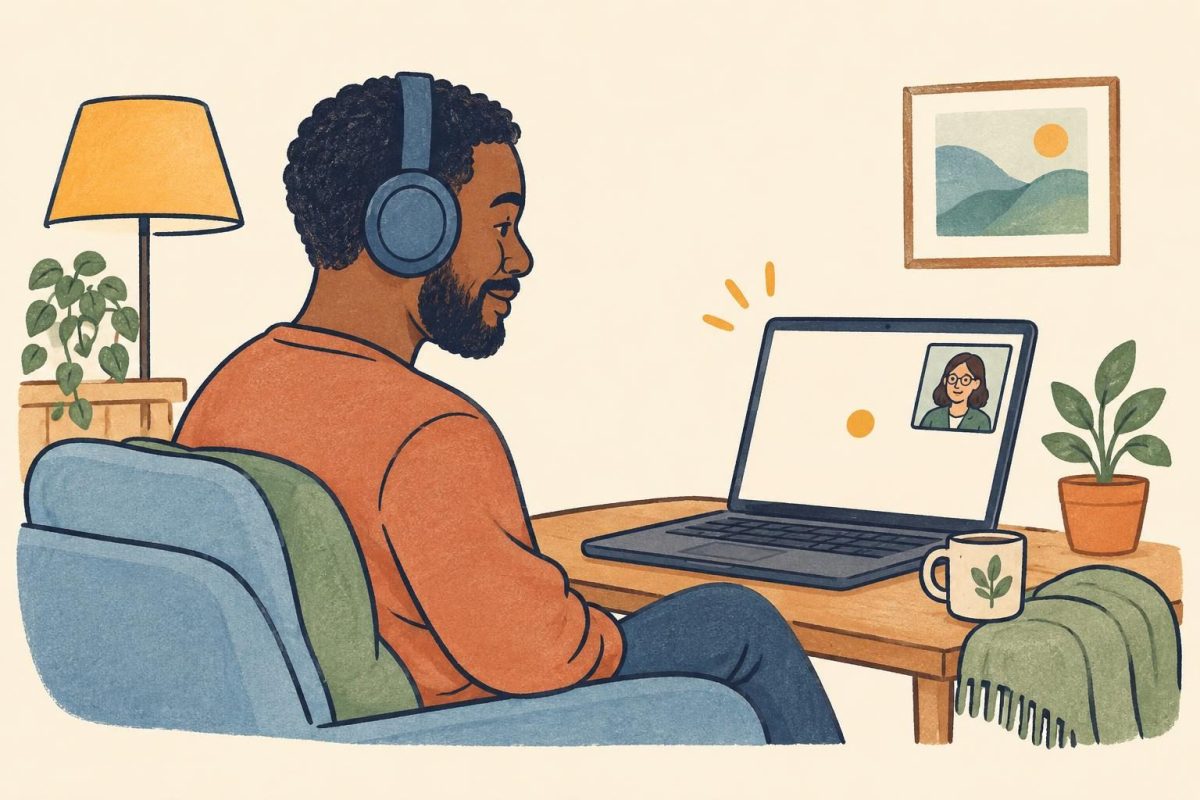
If you have been considering EMDR (eye movement desensitisation and reprocessing), you may have pictured a therapist sitting opposite you, moving their fingers from side to side while you follow with your eyes. That picture is accurate for many sessions. So it is natural to wonder whether EMDR can work when you and your therapist are in different places, talking through a screen.
The short answer is that many trained EMDR therapists now offer it by video, and for a lot of people it works well. This article explains how the key part of EMDR, known as bilateral stimulation, is adapted for online sessions, what the evidence says, and what you can do to make remote EMDR feel safe and comfortable.
A quick reminder: what bilateral stimulation is
EMDR is a structured therapy most often used to help people process distressing memories, particularly after trauma. During the processing stages, your therapist asks you to bring a memory to mind while you pay attention to something that moves or alternates from one side of your body to the other. This is called bilateral stimulation, which simply means stimulation on both sides.
The most familiar form is following a moving target with your eyes. But bilateral stimulation can also be done through alternating taps or alternating sounds. In face-to-face EMDR, therapists have used all three for a long time, choosing whichever suits the client best.
Researchers are still exploring exactly why bilateral stimulation helps. One idea is that holding a memory in mind while also focusing on a task takes up some of your attention, which may make the memory feel less vivid and easier to work with. What matters for online therapy is that none of these methods requires the therapist to touch you or be in the room. They only need a way to guide the movement, tapping or sound.
Can EMDR work by video? What we know so far
EMDR is a well-established therapy. NICE recommends it as one of the treatment options for adults with post-traumatic stress disorder (PTSD). Most of the research behind that recommendation was carried out with face-to-face sessions.
Online EMDR has a shorter history. It grew considerably when many therapists moved their work online during the pandemic, and since then studies and therapist reports have started to build up. Research so far suggests that EMDR delivered by video can reduce distress in a similar way to in-person sessions for many people, though the evidence base is smaller and still developing.
It is fair to say that online EMDR is not right for everyone, and no form of EMDR works for every person. But for many people it is a realistic, helpful option, especially if travelling to a clinic is difficult or if being at home helps them feel more settled.
How bilateral stimulation is done online
Your therapist will usually try one or two methods with you early on, before any memory work begins, so you can find what feels comfortable. You can also change methods during therapy if something stops working for you.
Following a target on screen
This is the closest online version of the classic finger movements. A dot, ball or other simple shape moves smoothly from one side of your screen to the other, and you follow it with your eyes while keeping your head still.
Your therapist controls the speed and how long each set lasts. Some video platforms have this built in, and others use separate software. It tends to work best on a laptop or desktop screen, because a phone screen is often too small for your eyes to move very far.
Tapping
Tapping is something you do yourself, guided by your therapist. Common forms include:
- The butterfly hug: crossing your arms over your chest so each hand rests near the opposite shoulder, then gently tapping left and right in turn.
- Knee or thigh tapping: resting your hands on your legs and tapping one side, then the other.
- Small hand-held tappers: some people use buzzers that vibrate alternately in each hand, though these are not needed for online EMDR.
Many people find tapping grounding because it keeps them aware of their own body. It can also be useful if eye movements feel tiring or uncomfortable.
Alternating sounds
With headphones on, you hear a tone, click or soft sound that moves between your left and right ear. Your therapist can play this through the session. Headphones are essential here, as speakers will not separate the sound properly. Some people combine sounds with eye movements or tapping.
What a remote EMDR session can feel like
The structure of an online EMDR session is broadly the same as one in a therapy room. Your therapist will check in with you, guide you through sets of bilateral stimulation, and pause between sets to ask what you notice. You do not need to describe everything in detail. Often a few words are enough.
Some people say the experience feels surprisingly similar to in-person work. Others notice differences. For example:
- You may feel more relaxed in your own space, which can make it easier to open up.
- You may miss the sense of someone physically nearby, at least at first.
- Your therapist sees less of your body language, so they may check in with you more often and ask you to tell them how you are feeling.
Being honest with your therapist about how the format feels is helpful. They can adjust the pace, the method of bilateral stimulation, or how much time is spent on calming techniques.
Setting up for online EMDR
A few practical steps can make sessions run more smoothly:
- Use a larger screen if you can. A laptop or computer usually works better than a phone, particularly for eye movements.
- Sit at a comfortable distance. Your therapist may ask you to move closer or further back so the moving target is easy to follow.
- Have headphones ready, even if you plan to use visual or tapping methods, so you have options.
- Check your connection before the session and close other apps or tabs that might slow things down.
- Choose a private spot where you will not be interrupted, and let others in your home know you need the time undisturbed.
- Keep water and something comforting nearby, such as a blanket or an object that helps you feel grounded.
Staying safe and steady when you are at home
Because EMDR can bring up strong feelings, good EMDR therapists spend time on preparation and calming skills before processing begins. Online, a little extra planning helps too. Your therapist is likely to talk through:
- What happens if the call drops. You might agree that they will phone you, or that you will use a grounding technique while you reconnect.
- Where you are during sessions. Therapists usually ask for your location and a contact number at the start, in case they need to get help for you.
- How to close the session. Sessions normally end with time to settle, so you are not left feeling raw when the screen goes off.
- What to do afterwards. Because you are already at home, it can help to plan a gentle activity after your session, such as a short walk, a warm drink or some quiet time, rather than going straight into something demanding.
It is common to notice memories, dreams or feelings between sessions. Your therapist can suggest ways to note these down and manage them until your next appointment.
Online therapy is not an emergency service. If you ever feel unsafe or at risk of harming yourself, call 999 in an emergency, call NHS 111, or contact Samaritans free on 116 123 at any time, day or night.
Is online EMDR right for you?
Online EMDR may suit you if you find travel difficult, live far from a specialist, feel calmer in familiar surroundings, or simply prefer the convenience. It may be less suitable if you do not have a private space at home, if your living situation does not feel safe, or if you tend to feel very disconnected or overwhelmed when distressed. In those cases, a therapist may suggest building more stability first, or meeting in person.
If you are not sure whether EMDR is a good fit for what you are going through, it can help to talk to your GP or a registered therapist about your situation. A good therapist will be open about whether they think online work is suitable and will not rush you.
When choosing someone, look for a therapist who is registered with a professional body and who has completed recognised EMDR training, and feel free to ask how they deliver bilateral stimulation online. On WebcamTherapy, you can book a registered therapist for a private video session in your browser, and the platform includes on-screen bilateral stimulation for therapists who offer EMDR.
Whatever you decide, taking time to understand how a therapy works is a thoughtful first step. You are allowed to ask questions, go at your own pace and choose the setting that feels right for you.
WebcamTherapy editorial team
Our articles are reviewed by registered therapists before publishing.
Related articles

EMDR
Preparing for EMDR: resourcing, safe place and stabilisation
Before EMDR works on difficult memories, there is usually a preparation stage. Here is what resourcing, the safe or calm place exercise and stabilisation involve, and why this groundwork matters.
19 Feb 2025 · 7 min read

EMDR
What is EMDR therapy, and what happens in a session?
EMDR is a structured therapy that helps people process distressing memories. Here is a clear guide to how it works, the eight phases, and what a typical session involves.
10 Apr 2023 · 6 min read

Therapy explained
How CBT works: the links between thoughts, feelings and behaviour
Cognitive behavioural therapy is built on a simple idea: what we think, how we feel and what we do all affect each other. Here is how that cycle works, and how CBT helps you change it.
10 Nov 2026 · 7 min read